
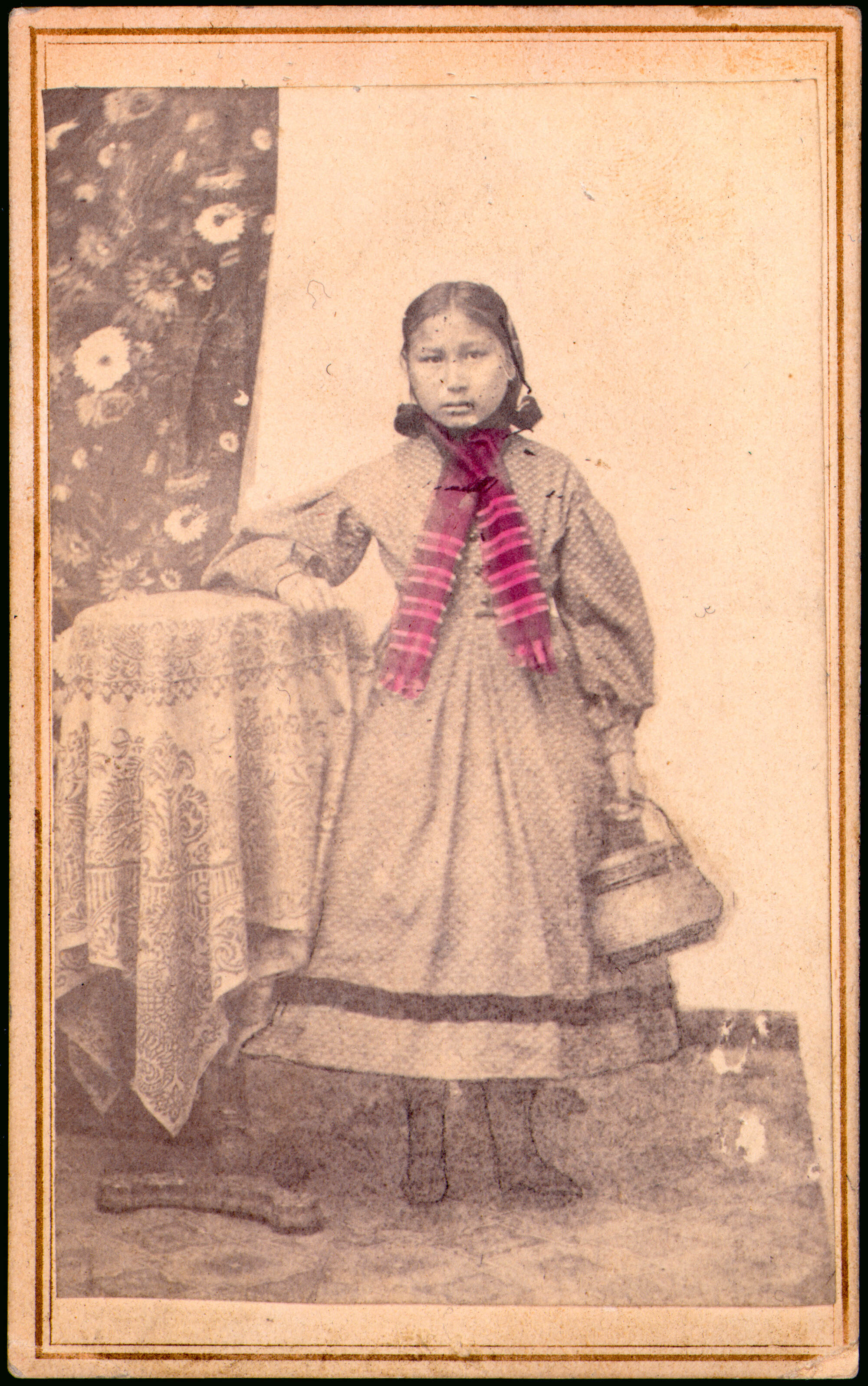
Every so often, we get a question regarding the haunting photo of the girl said to be the only survivor of the Sand Creek Massacre. She is sometimes referred to as “Minnie” and sometimes presented without a name. Searching through newspapers from the time of the massacre produced conflicting information. Some sources claim she was raised by Miss Ford in Central City. Some said she was sent to Arizona, and others that she was adopted by Sand Creek veteran, Colonel Tappan, and moved back east with him and his wife. While we have many books related to Sand Creek, few mention much about any surviving children. Luckily, we stumbled upon an essay written by Ann Braude that may contain the most complete record of what happened to the handful of children who survived the massacre. There is also the journal of Colonel Samuel F. Tappan, which is being digitized by History Colorado.
![A drawing shows the relative locations of Native American (Cheyenne) tepees and the members of the Third Colorado Regiment at the start of the massacre at Sand Creek, Colorado. Published in Luella Shaw's 'True History of Some of the Pioneers of Colorado' (1909), opposite page [115], which is a compilation of hagiographic articles about early white settlers and military leaders in Colorado during the late 19th century.](https://history.denverlibrary.org/sites/history/files/recollect_1065267.jpg)
George Bent, a famous Colorado interpreter who had a Cheyenne mother and white father, wrote a letter to Colonel Tappan in which he gave an account of the murder of most of the adults while sheltering in a sand pit during the massacre. Those killed included Minnie’s father and younger sister. Minnie and another child were eventually taken alive after George Shrock prevented fellow soldier Billy Weiss from murdering the girls. A boy was taken by another soldier to be displayed in the circus and another young girl taken died soon after. The soldiers of Company B of the Third Colorado Cavalry named the girl in the picture Minnehaha after a character in the popular Henry Wadsworth Longfellow's poem "The Song of Hiawatha". The soldiers soon brought her back to Central City and placed her in the care of Miss Ford. Minnie then became a student at the new Episcopal School run by Albin Jennings. Jennings agreed to provide her education free of charge.
After more than two years living in Central City and becoming fluent in English, Minnie was faced with the prospect of returning to her tribe. The Cheyenne (including Chief Black Kettle) worked with the territorial governor and the Bureau of Indian Affairs to see abducted children returned to the tribe. The boy who had been sent to the circus was returned to his family without incident, but Central City community members opposed the return of Minnie. It was unclear where Minnie stood considering her parents had been killed. It is also unclear how much keeping her in white society would appear as a propaganda win for white society. Tappan, who had been a fervent supporter of reparations to the Cheyenne, agreed to bring her back east for an education.
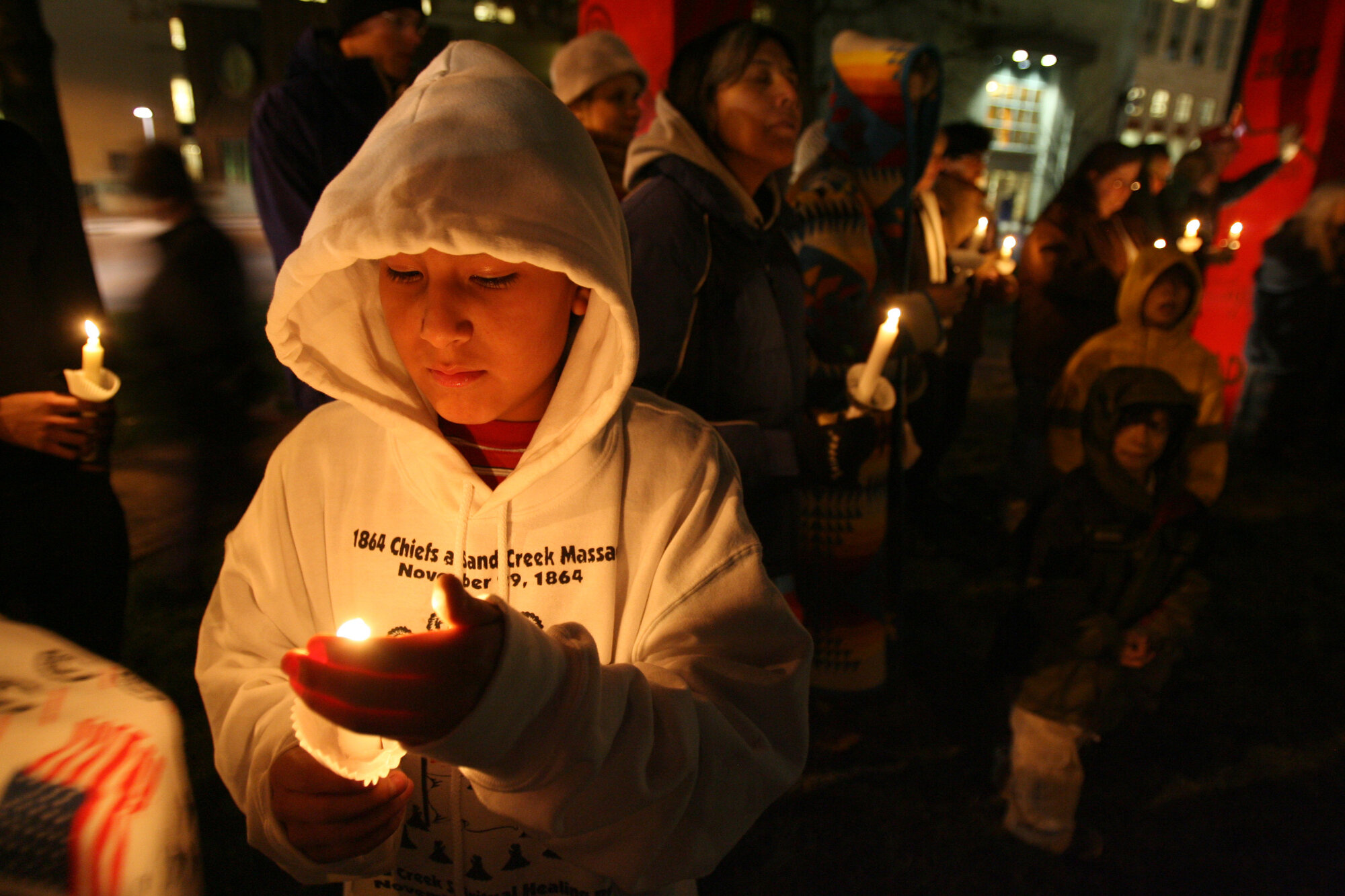
Tappan finished up his work with the Peace Commission in Colorado and headed to Massachusetts. After their arrival in Boston, Minnie enrolled in the Children’s Progressive Lyceum. This was part of the popular new religion of spiritualism where adherents would converse with the dead. They had a particular interest in holding seances to communicate with Native Americans, which must have been an uncomfortable thing for a girl who had witnessed the slaughter as Minnie had. While at the school, she related that her father had been a medicine man and that her name was Em-mu-ne-eska. Sadly, Braude spoke with a representative of the tribe who could not make sense of the name. She speculates it was mis-transcribed or the girl had not spoken her language in so long that the name came out muddled.
According to Colonel Tappan, Minnie wanted to be educated and return to her people as a teacher. She had been a good student and was granted a scholarship to prep school at the new Howard University for freedmen. Not long after her arrival, she became ill with tuberculosis. She died in the dormitory at Howard on November 23, 1873 and her body was shipped back to Boston for burial. It was estimated that she was around 16 years old. Her last days would have been spent among African Americans who also sought to bring the benefits of education back to their newly freed communities. While her true name may be lost to history along with much of her story, Ann Braude and others have done yeoman’s work in putting the fractured pieces of history back together so that we might get a glimpse at the ripples that echoed forth from those who survived the violence at Sand Creek.
Further Reading:
The Baptism of a Cheyenne Girl by Ann Braude
Life of George Bent written from his letters / by George E. Hyde; edited by Savoie Lottinville
Comments
Wow! What a story. Thanks…
Wow! What a story. Thanks for keeping her legacy alive.
With all the conflicting…
With all the conflicting stories around this girl, we were lucky to stumble upon Ann Braude's amazing research into her.
Add new comment