

It's no secret in Denver that Cheesman Park and the Denver Botanic Gardens sit on land that once served as cemetery grounds.
According to From Cheesman Park to Riverside by Phil Goodstein, Mount Prospect Cemetery opened on a 160-acre site in 1859, and the first burial took place on March 17, 1859, with the interment of Abraham Kay. In 1865, 40 acres of the cemetery became Mount Calvary, a burial place for Catholics. In 1872, Congress decreed that the site of Mount Prospect was technically federal land. The land was sold to the City of Denver with the provision that it always serve as a cemetery. In 1873, the cemetery became known as Denver City Cemetery.

By the 1880s, the City of Denver was pleading with Congress to change the status of the land from cemetery to park land. On January 25, 1890, Congress acceded to their demands, and Denver City Cemetery became Congress Park.
On March 14, 1893, the task of moving the interred from the Denver City Cemetery to Riverside Cemetery began under the management of local undertaker E. P. McGovern, the lowest bidder on the project. Denver City Cemetery's recordkeeping was poor and estimates for the number of graves needing to be moved ranged from 2,000 to up to 20,000. Due to his mishandling of the project, McGovern was famously dismissed on March 21, 1893, by Mayor Platt Rogers before all of the graves could be relocated. Rogers cited several reasons for the dismissal, including McGovern's failure to provide employees a wash area, the use of boxes of an inappropriate size and material for human remains, and the discovery that a coffin prepared by McGovern's team contained only pieces of wood inside. The Denver Republican reported on allegations that McGovern and crew dismembered corpses so they could be placed in child-sized coffins, as McGovern's contract stipulated he would be paid $1.90 for every coffin moved.
A formal plan to relocate all of the graves from City Cemetery was abandoned by the City. Instead, the families of the deceased were held responsible for organzing the exhumation and reburial of human remains and were given a deadline of November 30, 1893. As a result, it is estimated that between 2,000 and 5,000 graves were never moved from the future site of Congress Park.
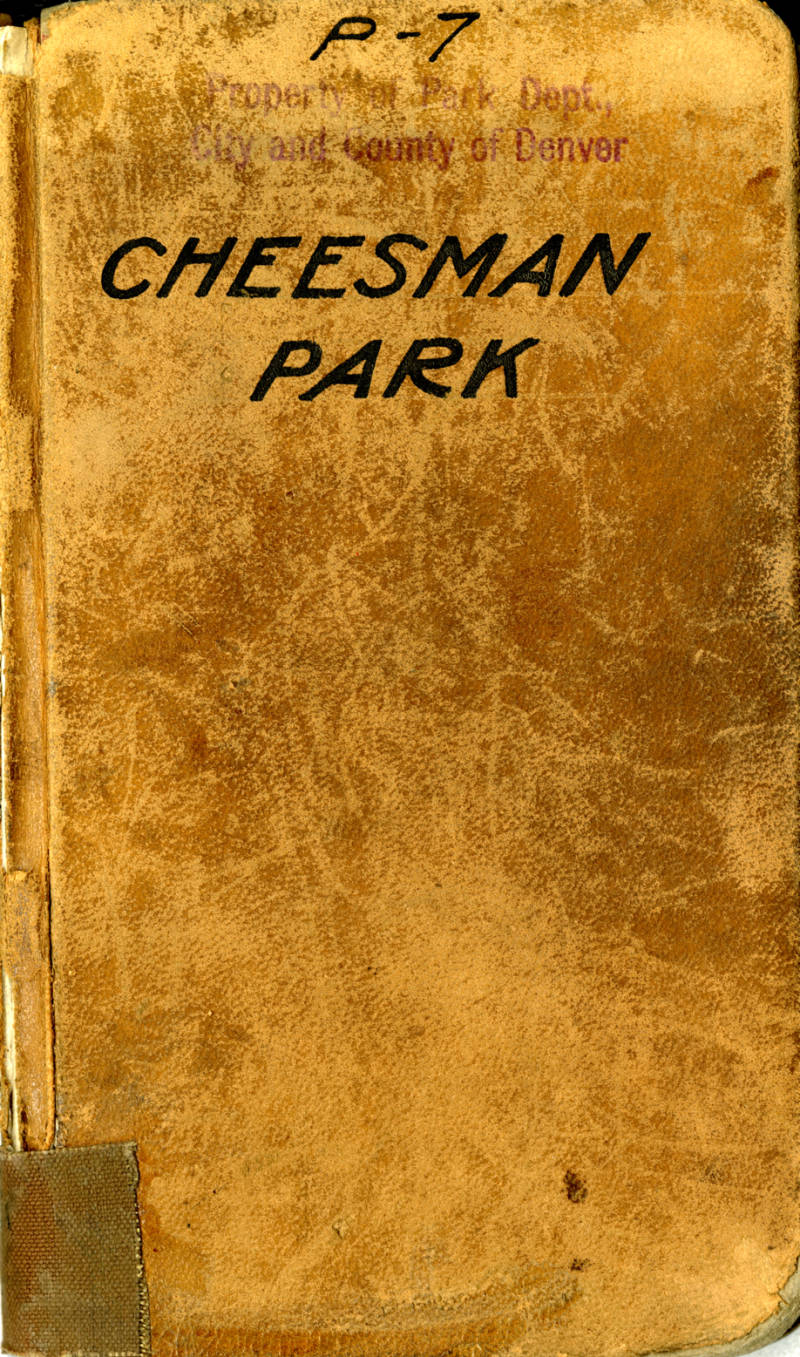
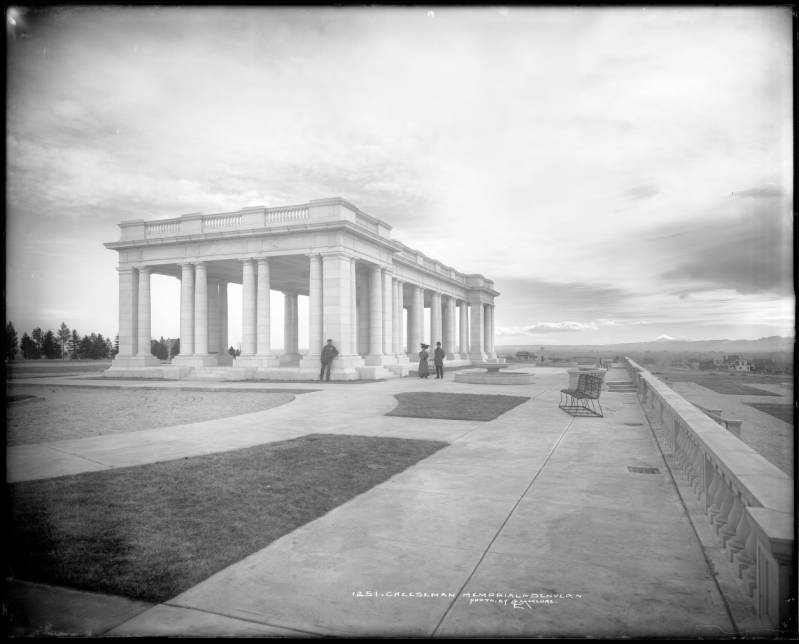
Denver Mayor Robert W. Speer, a proponent of the City Beautiful movement of the early 1900s, looked to beautify Congress Park, but claimed the City did not have the funds to do so. He encouraged benefactors to donate, but didn't have any success until the widow and children of Walter Scott Cheesman (1838-1907) came forward with $100,000 for a park pavilion. Hence, the park became known as Cheesman Park.
In 1950, the City of Denver successfully persuaded the Catholic Archdiocese of Denver to deed the Mount Calvary land back to the City. While a city botanic garden was originally planned for construction in City Park, it was relocated on the Mount Calvary site. The Denver Botanic Garden was dedicated in 1959.

Want to learn more? Sources from DPL's Special Collections and Archives:
- From Cheesman Park to Riverside by Phil Goodstein
- The Ghosts of Denver: Capitol Hill by Phil Goodstein
- Calvary Cemetery Cemetery Listing (1889-1893)
- Riverside Cemetery Burial Register Index, 1876-1963
- History of Cheesman Park, 1965 by the Denver Parks and Recreation Department (report)
- Cemetery maps by Louisa Ward Arps
- Cheesman Park Hill History (1959) by Louisa Ward Arps
- History of Denver, with outlines of the earlier history of the Rocky Mountain country (1901) by Jerome C. Smiley

Comments
According to Silas Soule : a
According to Silas Soule : a short, eventful life of moral courage by Tom Bensing, he was buried at Mount Prospect, which is now Cheesman. His current grave can still be visited at Riverside.
With equipment that can show
With equipment that can show under ground as they make passes over an area of ground, why can't they still look for bodies buried under Cheeseman Park? Seems wrong and disrespectful to leave the bodies there.
How many Native Americans…
How many Native Americans are buried there?
I live on Cheesman Park and…
I live on Cheesman Park and still can't find any period maps that show where, specifically, the graves were. I know that there were separate areas for various sectors, rich, poor, catholics, jews, etc. Please let me know if anyone has the general map of graves....thanks
I was Barbara Cheesman…
I was Barbara Cheesman before marriage.
I was Barbara Elizabeth…
I was Barbara Elizabeth Seton Cheesman before marriage. My father was Charles Edwin Cheesman a
Thank you for providing this…
Thank you for providing this information and the link to the cemetery records, I was able to verify that Horace HAW Tabor (and infant son) buried here originally before being moved (in theory) to Mt. Olivet in Wheat ridge where his memorial now stands with Baby Doe and Joseph in the same plot.
Do you know if the buildings…
Do you know if the buildings in the background of the first and second photo still exist? If they do, where are they located?
Add new comment