
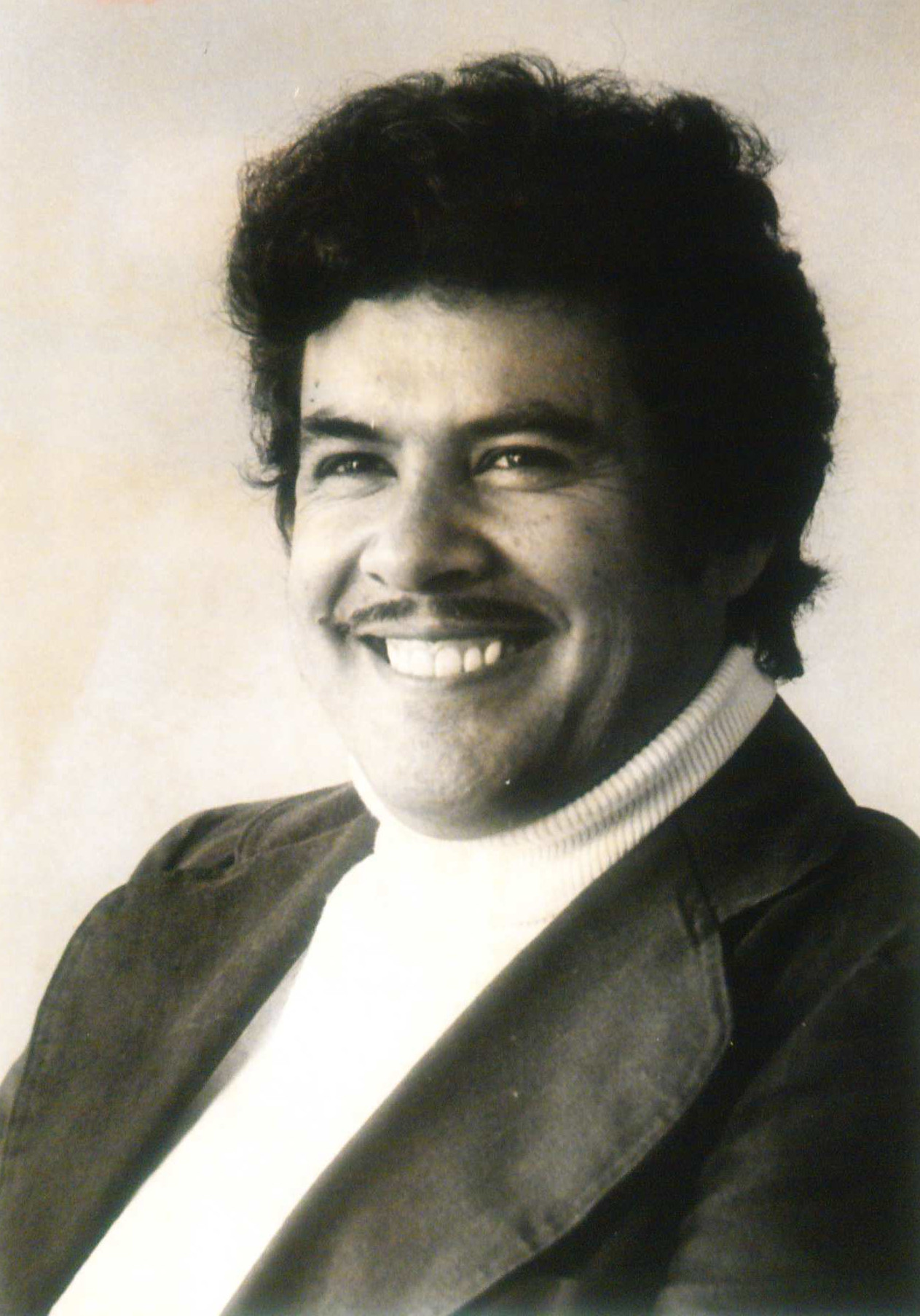
Carlos Santistevan was born and raised in Five Points. He has spent his life creating art and promoting equality for members of the community.
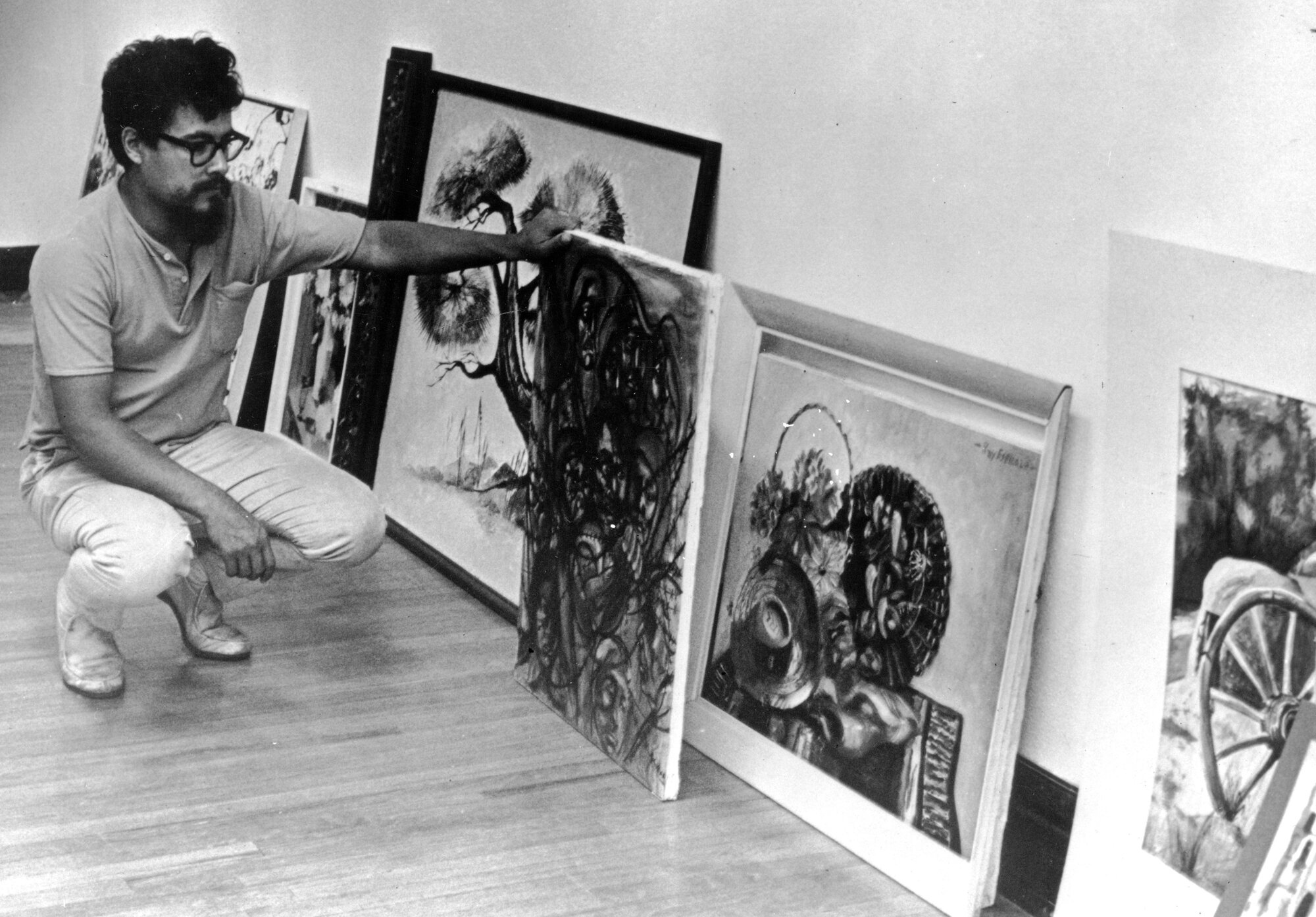
Carlos Santistevan was born in the Denver Five Points neighborhood in 1938. He was the youngest of four children born to Rudolph and Barbara. His father participated in Franklin Roosevelt’s Works Progress Administration programs before taking a job at the iron foundry. His mother was a nurse's aid as well as a politically active member of local committees that sought to elect representatives who would serve the community. She got Carlos involved in local volunteer organizations at a young age.
When Carlos was 7 years old he was inspired by a carving his father had made, and, by the time he was 10, began carving his first works of art out of wood. In his early years, he attended Sacred Heart and Cathedral High School. While at Cathedral, he was told he wasn't college material, so he enrolled in Emily Griffith Opportunity School where he learned welding and shortly became skilled enough to teach his own welding class at a local college.
His love of art quickly turned toward the Southwestern tradition of crafting santos. Santos are a form of Latino folk art that became popular in the region during the 1700s. While teaching various techniques in his welding class, he made a bust of Christ that was presented to the Pope during his 1993 visit and is still housed in the Vatican.
His passion for Chicano culture overlapped with his desire for equality in the Chicano community. By 1966 he became a member of the Denver Opportunity action council, which sought to fight poverty in low income neighborhoods. He also became an active member in the Crusade for Justice, which was a large part of the Chicano movement in Denver. In 1968, they named Carlos the Crusade for Justice rally chairman of the Poor People’s Campaign. The Poor People’s Campaign, a part of the national civil rights movement, was organized by Martin Luther King, Jr. and the Southern Christian Leadership Conference. Participants in the campaign, including Carlos and other Crusade members, set up a large camp in Washington, D.C. that lasted for six weeks in the spring of that year.
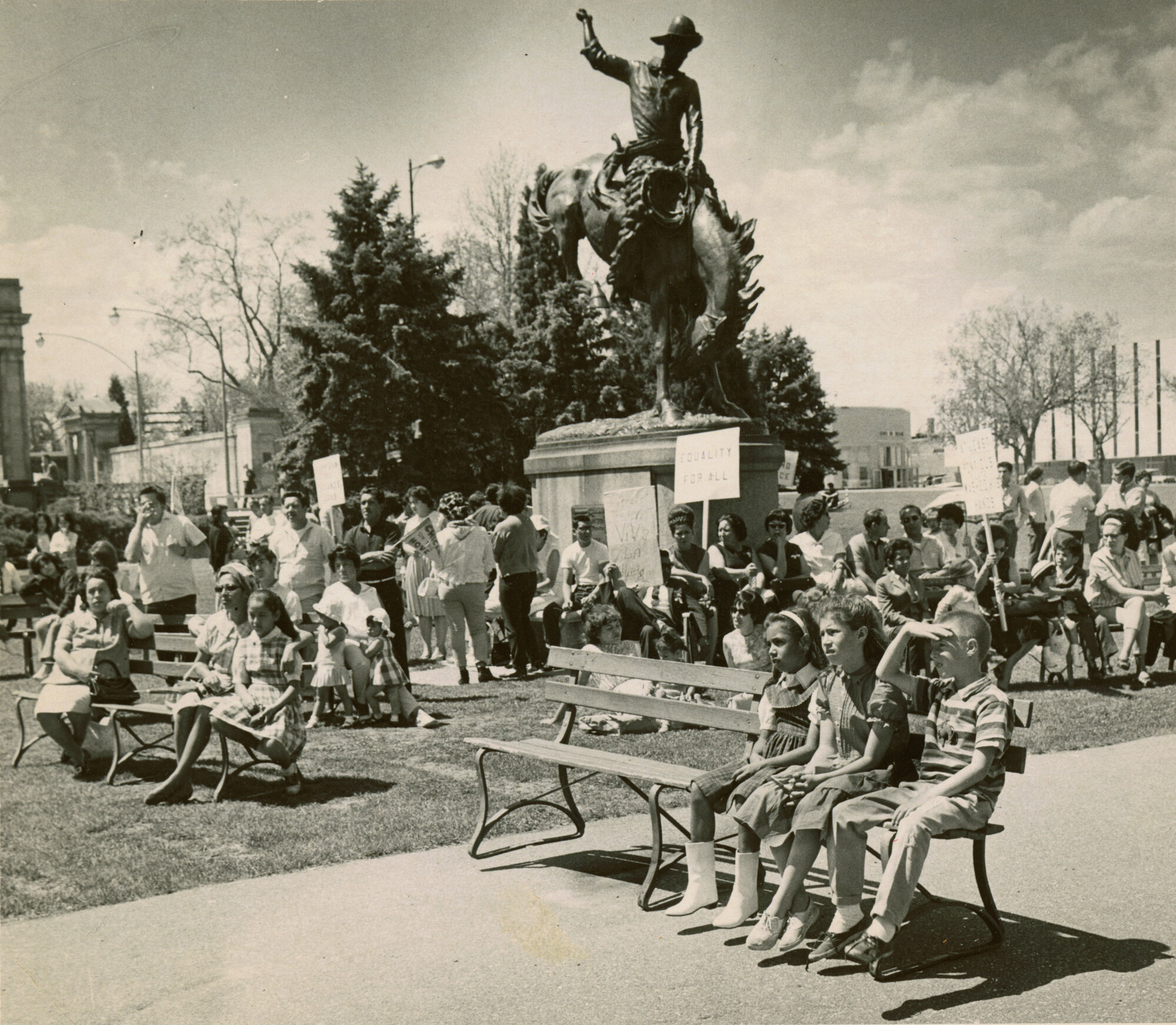
The same year Carlos fought for national change in Washington, D.C., he also taught art classes to students at the Crusade for Justice headquarters in Denver. At this location he began El Grito de Aztlan Gallery in 1968, the first Chicano art gallery in the nation.
In 1970, Carlos travelled with several other members of the Crusade to Los Angeles for a big protest against the Vietnam War. As the protest turned violent, famed civil rights activist and LA Times reporter Ruben Salazar was shot and killed by police using a tear gas canister inside a bar. They arrested Carlos and 23 other Colorado activists and held them in jail for days.
After returning to Colorado, Carlos ran for a state senate seat on a platform of free education and better housing. While continuing to engage in art and activism, he completed his degree in sociology at the University of Colorado, Denver in 1974. By the next year, he began work as an aide to United States representative Pat Schroeder. He worked for Pat until 1980.
During this same period in the late 1970s, Carlos and others saw the Five Points neighborhood threatened by a city urban renewal project. He grew up in a tiny corner of the neighborhood between Tremont, Washington, and 20th Avenue, a neighborhood the Denver Urban Renewal Authority named the Arrowhead Project.
Carlos remembered being “able to walk from my house at 25th and Glenarm over to 23rd and point out every house that was rented. We were that close in the neighborhood.” - Rocky Mountain News, July 9, 1978
Rather than fixing up this largely African American and Latino community, they planned to destroy many of the historic homes and build cheaper low-income housing. Carlos, along with local African American leader Hiawatha Davis, Jr., spoke out against the plans and the lack of input from residents regarding the project. In the end, many long-term residents, most of whom rented their homes, saw their homes sold; developers replaced much of the neighborhood with high rises and condominiums.
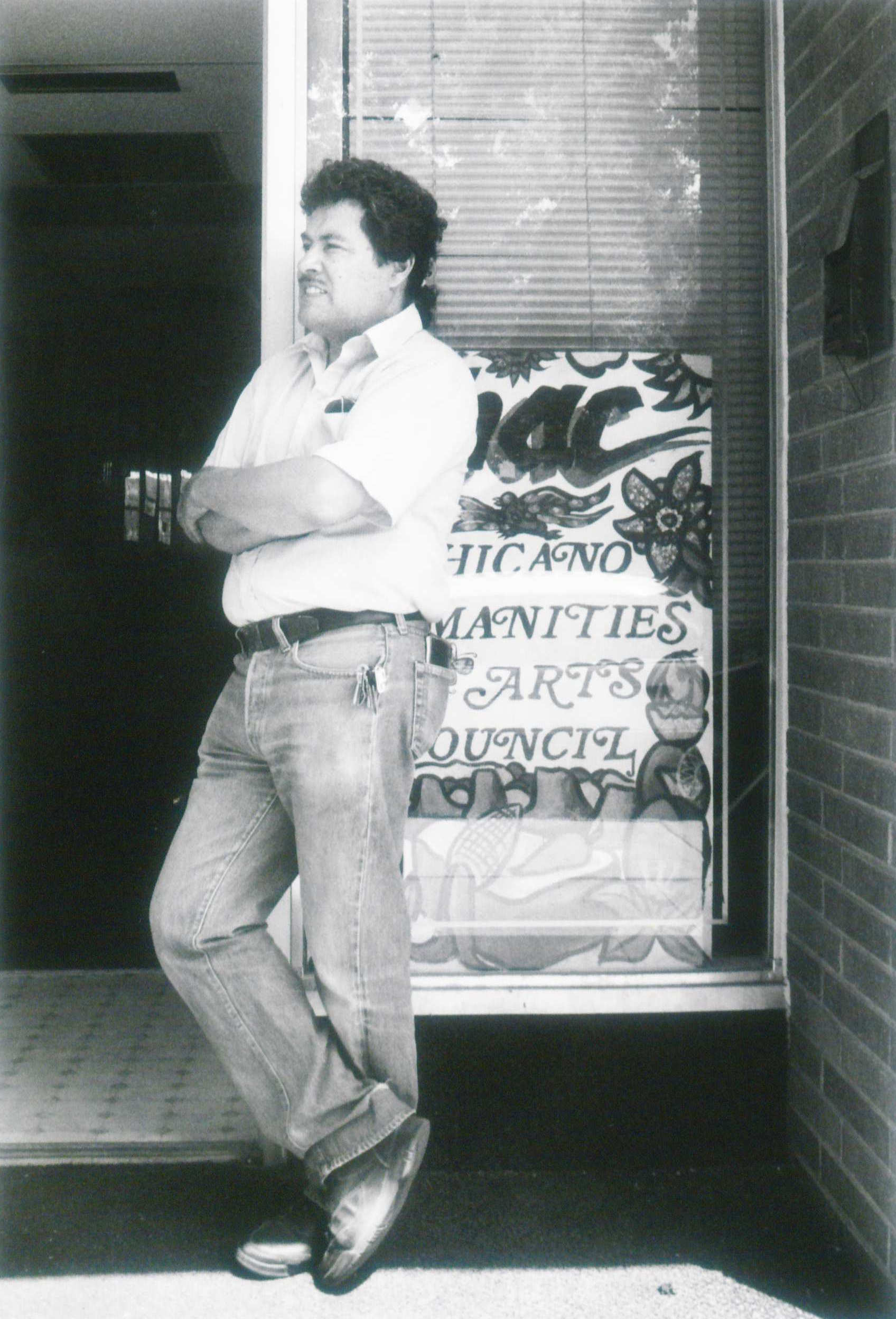
Another way Carlos sought to preserve and promote local culture involved collaborating with other local Latinos to form the Chicano Humanities and Arts Culture. The group sought to find talented writers and actors within the community. Carlos even wrote his first play as part of the program. The group went on to collaborate with theaters and galleries to sponsor plays as well as showings of culture, painting, crafts, and photography. Carlos, already a member of the board at Denver Art Museum, joined the museum's new Hispanic Advisory Board in 1984. At the same time, he worked with the Chicano Humanities and Arts Council (CHAC) as an artist and, at one point, its director. CHAC sought to provide opportunities and exposure for artists and writers around the state as well as art education to students. The council brought Spanish colonial folk art styles from rural areas in the state to larger audiences in cities like Denver.
Not content to simply immerse himself in his love of art, he continued his work trying to improve the lives of those in need. During the 1980s and 1990s, the AIDS epidemic affected many communities, with few treatment options for those suffering from the disease. In 1992, Carlos served as the community resource developer and later the executive director for the People of Color Consortium against AIDS. Across the country, particularly among many minority groups, people felt shame for having the disease, which made it difficult for them to seek help. Carlos’ group tried to connect with people, including those most impacted by the disease, like the LGBTQ community, teens, and other marginalized groups. The group worked to provide health education, food, emotional support, and other necessities. Carlos even dressed as Santa Claus to distribute gifts for families impacted by AIDS.
“It is a unique program because it not only provides a gift and aid for the infected member, but for all the children in the family 18 and under.” - Carlos Santistevan, La Voz, September 20, 1995
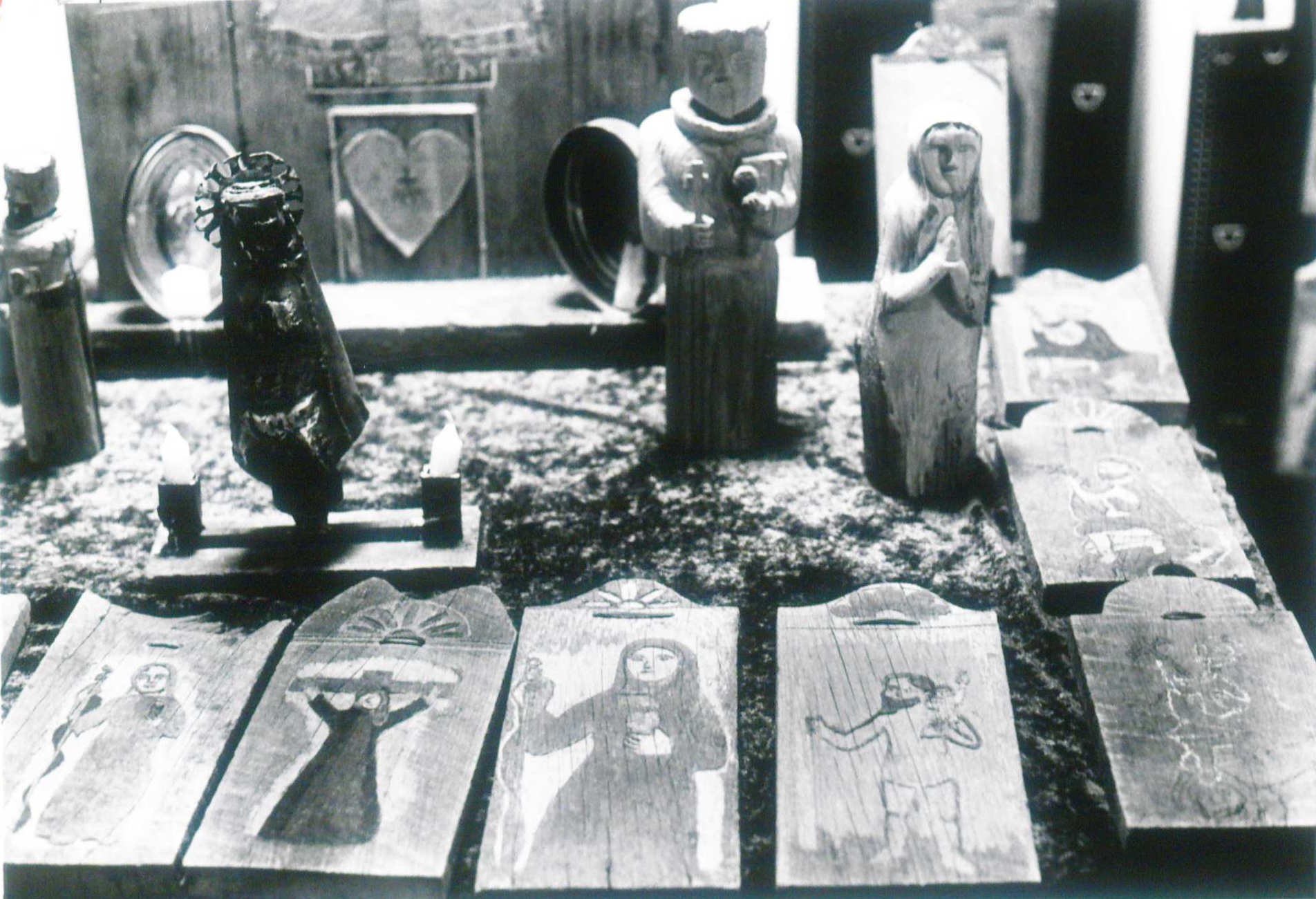
Carlos and his wife Anita had three children: Carlos, Jr., Brigida, and Rudolfo. In 1977, Carlos became the first santero (carver of santos) to be invited to participate in Sante Fe’s famous Spanish Market. In 1992, Carlos was recognized by the Hispanic Annual Salute for his work with the Denver Art Museum, his service within the Five Points community, and his contributions to art and health education. He was a recipient of the Colorado Council on the Arts 1999 Heritage Award honoring master folk artists. Carlos’ sculpture Santo Niño de Atocha is permanently housed at the Smithsonian Institution in Washington, D.C. In 2012, Carlos, Brigida, and Carlos, Jr. all won awards at the Santa Fe Spanish Market. CHAC celebrated Carlos in 2016 as a founding member and awarded him a lifetime achievement award.
“I felt like this was an excellent way to recognize him for all he’s done for CHAC and the Denver community,” Trujillo said. “He’s going to be showing with his son and his daughter which is really unique because he has passed down his techniques and traditions to his kids.” La Voz, March 16, 2016
Carlos continues to create and share his art with the Denver community.
foundry - a place were metal is cast into tools and other useful items
sociology - the study of how human societies work
AIDS - a disease that turns the human immune system against itself and was mostly fatal in the 1980s and 1990s
Why do you think Carlos felt so connected to the community he grew up in here? Do you feel a strong connection to a particular place or group of people?
Why do you think art was so important to Carlos?
Do you think there is a connection between art and serving the people of your community?
Carlo Santistevan Clipping File (Available upon request)
Santos : sacred art of Colorado
Santos : enduring images of northern New Mexican village churches / Marie Romero Cash