Galleries by The Professor

Saturday in the Archives: Equality Colorado
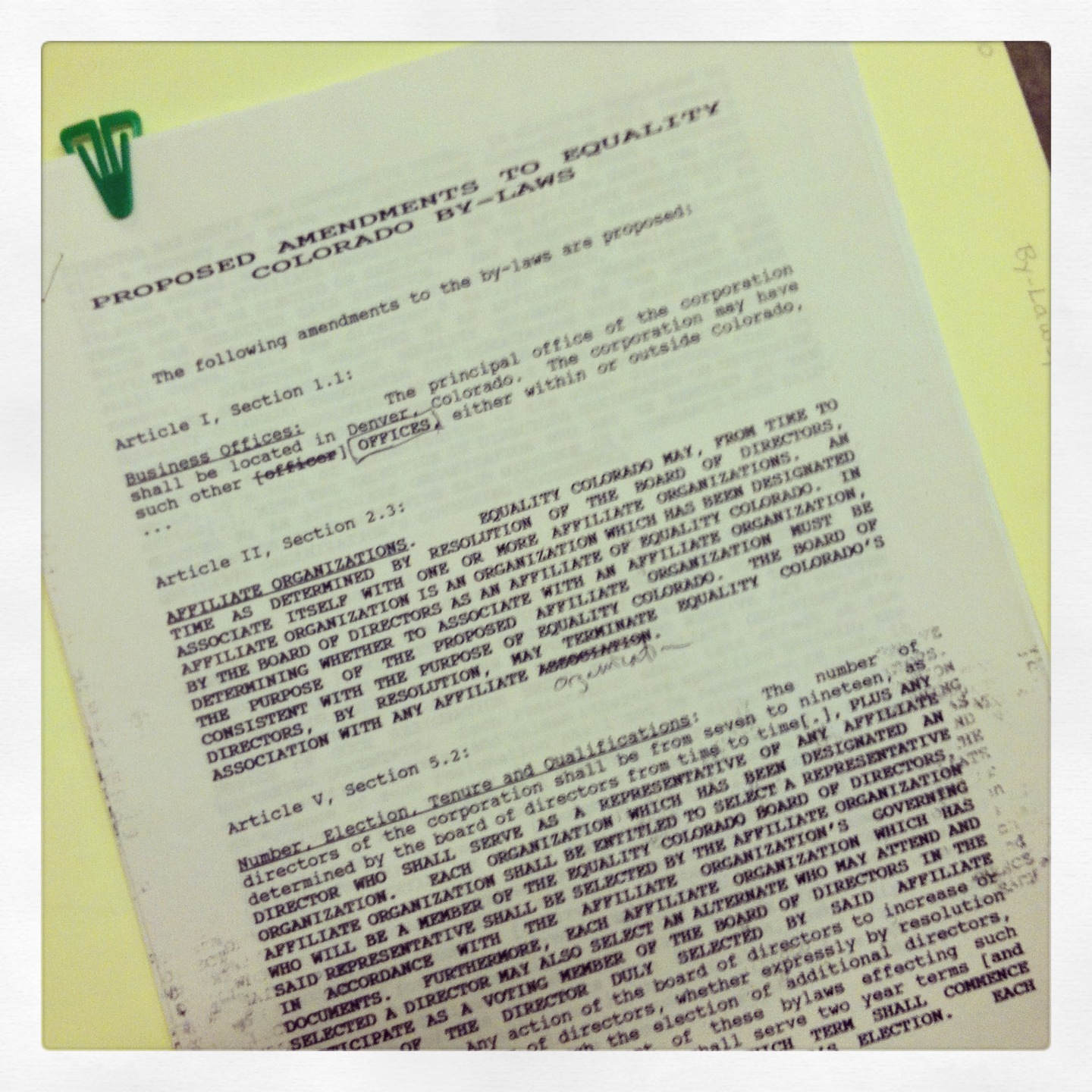
Many in Denver are celebrating PrideFest this weekend, so for this week's Saturday in the Archives I thought it would be interesting to highlight the records of Equality Colorado, one of several collections in the Western History/Genealogy Department related to GLBT history, issues, and events in Denver.

Equality Colorado was a political organization whose mission was to promote equal rights for Colorado's gay, lesbian, bisexual and transgender communities and their families through non-partisan state legislative advocacy. It was formed in 1992 on the heels of the passing of Amendment 2, a measure that banned local laws from protecting gays from discrimination. The focus of the group at that time was to inform the public about Amendment 2  and coordinate political work within the gay, lesbian, and transgender community, including lobbying and preparing for the next campaign. In 1996, the U.S. Supreme Court overturned Amendment 2. Equality Colorado continued as a political advocacy group. Three separate projects took up most of their time: lobbying in the legislature, the Voices of Faith program, and the Colorado Anti-Violence Project.

In 2001, Equality Colorado dissolved. Voices of Faith was absorbed into the Colorado Anti-Violence Project, which became an independent organization. Some board members from Equality Colorado formed Equal Rights Colorado as a liaison to interested parties on gay, lesbian, bisexual and transgender issues and related legislative proposals.

The records of Equality Colorado (WH1787) include correspondence, meeting minutes, financial documents, press releases and newspaper clippings. Papers of groups that were precursors of Equality Colorado (from 1988 to 1992) form a small portion of the collection. Also included are newsletters published by Equality Colorado as well as sample newsletters and articles about and generated by other organizations.

Come visit us to see this collection and learn more! Other GLBT-related collections at the Western History/Genealogy Department include the Evans v. Romer papers (WH2102), Colorado Aids Project records (WH868), Dee Farrell papers (WH1183), Denver Nevaar-Sister Who papers (WH749), and Anthony Palange papers (WH1230), among others.
Add new comment

Plain text

  • No HTML tags allowed.
  • Lines and paragraphs break automatically.

Manuscript Monday: Muriel Sibell Wolle

March is Women’s History Month, and this week’s Manuscript Monday features a collection from painter, designer, photographer, explorer, teacher, and historian, Muriel Sibell Wolle.  Read on!

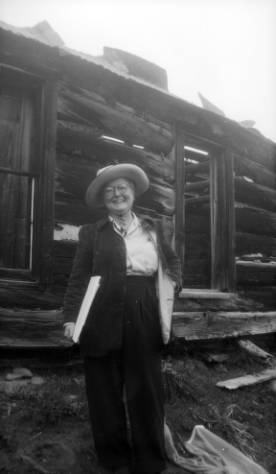
Muriel Sibell Wolle (1898-1977), originally from New York, earned her master’s degree in English Literature from the University of Colorado at Boulder.  Among her many other achievements, she went on to head the English department there.  After touring Central City, Colorado, in 1926, Wolle became enamored of western mining and ghost towns, which she studied in detail.  Her collection (WH906) is comprised of notes, articles, clippings, interviews, and much more.  Wolle wrote several books, including Stampede to Timberline, The Bonanza Trail, Montana Pay Dirt, Ghost Cities of Colorado, and Timberline Tailings.  Read more about Muriel Sibell Wolle in the online finding aid.  DPL also has some of her artwork in the WHG department and online in the Digital Collections.

This collection, along with many other amazing collections, books, photos, and oodles more, are available in the Western History and Genealogy department of the Central Library.

Add new comment

Plain text

  • No HTML tags allowed.
  • Lines and paragraphs break automatically.

Manuscript Monday: Clarence & Fairfax Holmes

Clarence and Fairfax Holmes

Good day to everyone in the blogosphere.  Manuscript Mondays is back just in time to celebrate Black History Month with the Clarence and Fairfax Holmes papers.  Read on!
 

February is Black History Month.  The Denver Public Library houses many books, photographs, and manuscripts collections that feature African American history and individuals.   

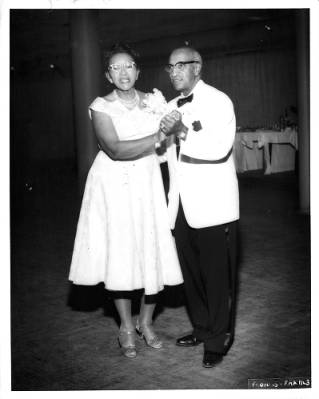
Clarence Holmes (1892-1978) grew up in Denver.  After graduating from Manual High School Holmes attended Howard University College of Dentistry in Washington D. C.   He went on to become the first African American to join the Denver Dental Society.  His office was in the Five Points Neighborhood at 26th and Welton.  In addition to the many other organizations Holmes served, he also helped found the Colorado-Wyoming chapter of the NAACP.

Clarence Holmes married Fairfax Butler Richey in 1923.  Fairfax was an integral member of many Denver and national educational and cultural organizations.  Her papers are also included in the collection.

You can read more about Clarence and Fairfax Holmes in the online finding aid here.

Take a look at the Digital Collections site for more photographs of the Holmes's.

The Blair-Caldwell African American Research Library is featuring many Black History Month events.  You can read more about them here.

Add new comment

Plain text

  • No HTML tags allowed.
  • Lines and paragraphs break automatically.

Manuscript Monday: Cyrus "Doc" Shores

Salutations!  This week’s Manuscript Monday highlights the collection of a western lawman: Cyrus “Doc” Shores (WH 344).
 

Cyrus “Doc” Wells Shores was named after the doctor who delivered him in 1844 in Hickville, Michigan.  Shores grew up in Michigan, and worked many jobs (mule train driver, bull whacker, manual labor) as he made his way through the West. After a time in the cattle business in Texas, Shores moved to Gunnison County, Colorado, where he served as sheriff from 1883-1891.  

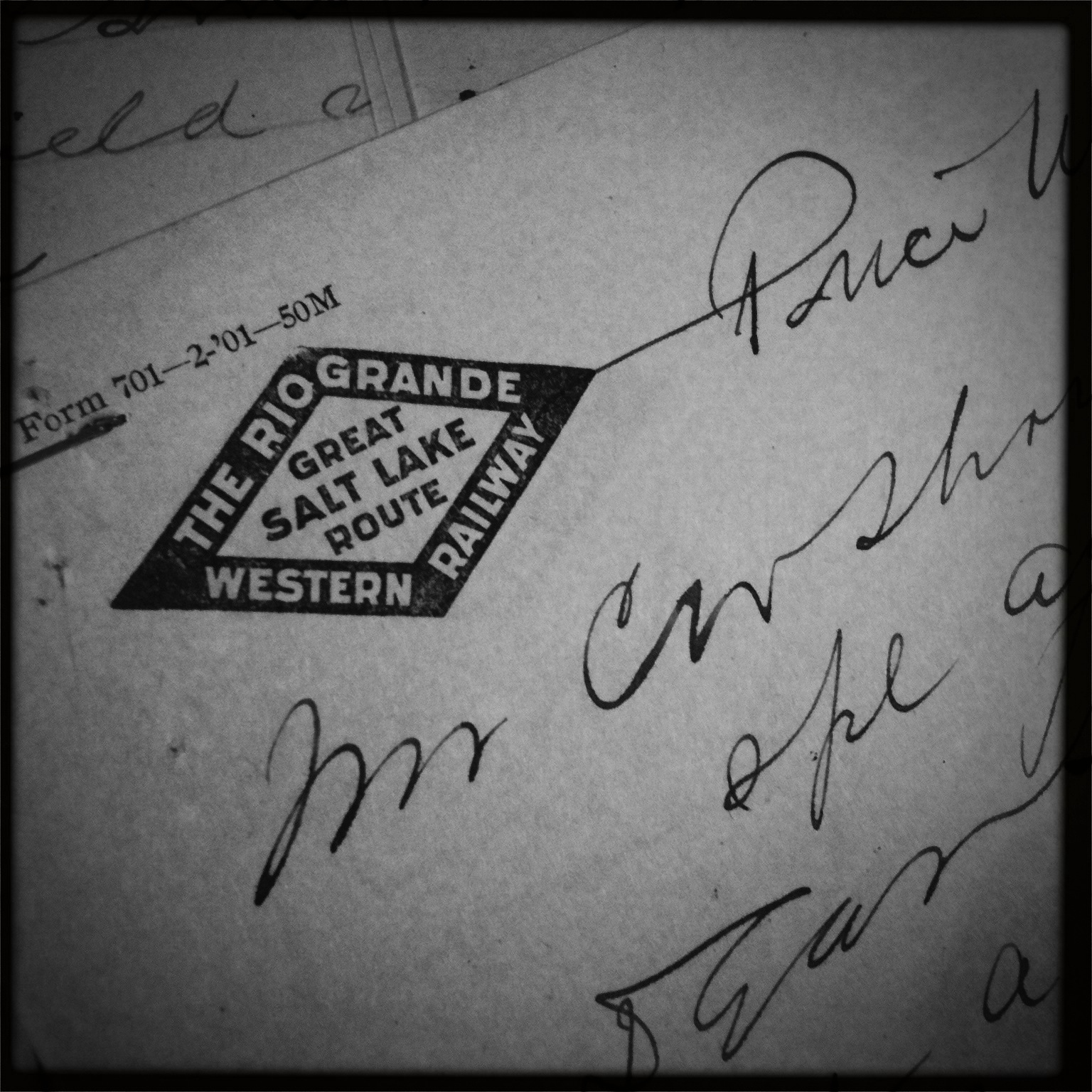
Some of the most interesting artifacts in this collection are Shores' correspondence from his time as a special agent for the Denver and Rio Grand Express, which includes letters and telegrams involving crimes, robbers, gangs, investigations, and so on.

Shores also penned many autobiographical stories later in his life.  Many of these narratives are included in this collection.  You can also see Shore’s stories in the book “Memoirs of a Lawman,” edited by Wilson Rockwell.

Read more about Shores in our online archive finding aid.  This collection, along side loads of others, is available in the Western History and Genealogy Department of the Central Library.

Permalink

I studied Shores' memoirs at the Library's Western History and Genealogy Department and using additional information from Rockwell's book and other sources, I wrote a 3 chapter story about Shores' life and crime fighting career that is available from the department's digital archives.

Add new comment

Plain text

  • No HTML tags allowed.
  • Lines and paragraphs break automatically.

Fabulous Finds Friday: Emily Howell Warner papers

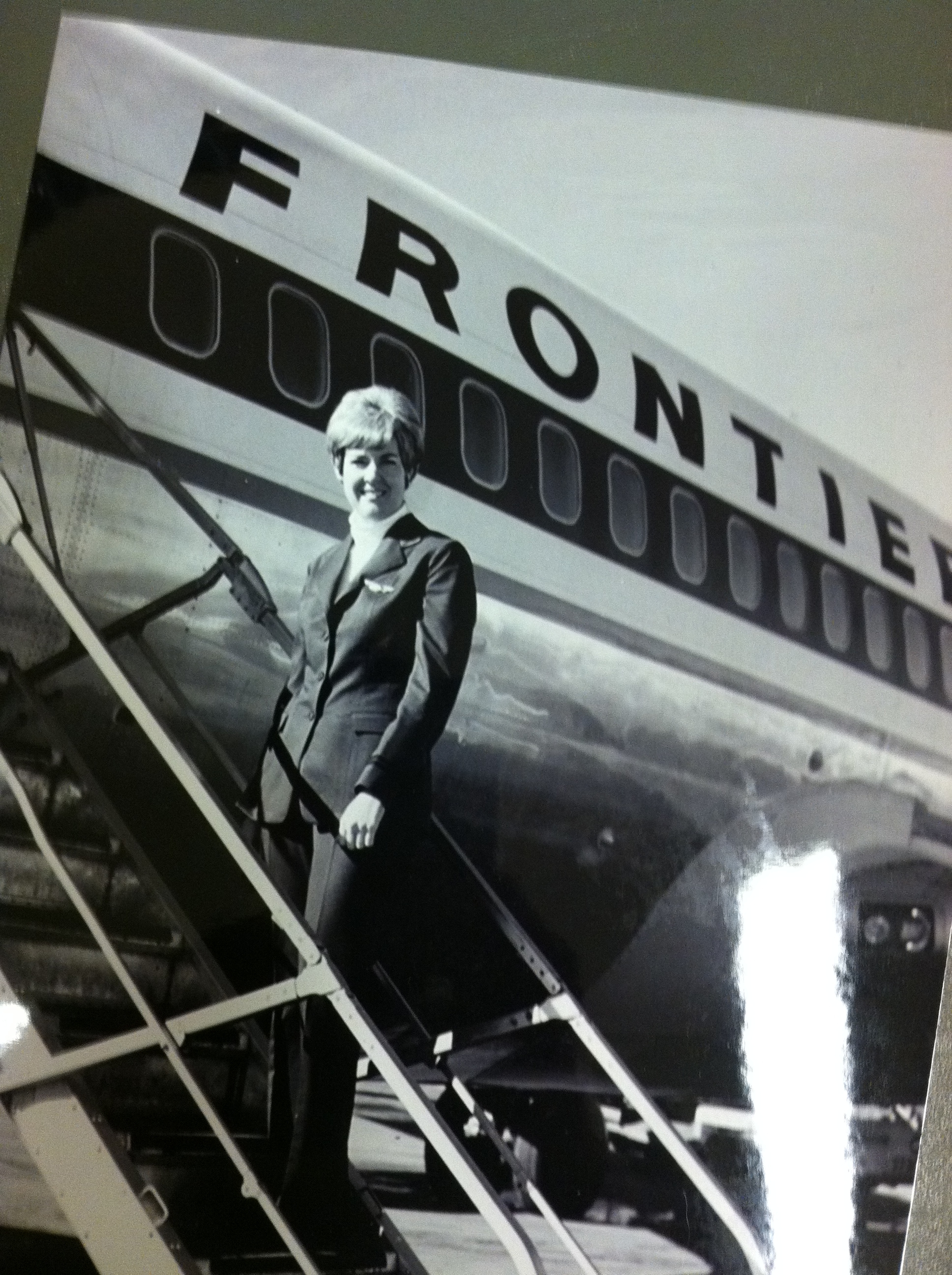
Welcome to Fabulous Finds Friday! This week's fabulous find are the papers of pilot Emily Howell Warner (-M2080).

Last year I had the pleasure of meeting Emily at her home, where she talked to me about her impressive career in aviation and showed me her numerous honors and awards.

Emily developed a passion to fly after taking flying lessons as a teenager, and, in 1973, she became the first woman to be hired as a pilot by a major U.S. airline (Frontier). Three years later, she also became the first woman to receive her captain’s wings. In 1986, Emily commanded the first all-female flight crew, and in 2001 she was inducted into the National Women's Hall of Fame.

The collection contains correspondence, programs, clippings, photographs related to her career as a pilot, and material pertaining to her induction into the National Women's Hall of Fame.

Donations to the Western History and Genealogy Department allow us to preserve, record, and make accessible the history of our great state and region. If you or someone you know has material that may be a good fit for our Archives Collection, please don't hesitate to contact us! Email Erin Edwards at The Professor@denverlibrary.org or call 720-865-1810.

Add new comment

Plain text

  • No HTML tags allowed.
  • Lines and paragraphs break automatically.

Manuscript Monday: Eben Smith

eben smith

Hello blog readers!  We celebrate the first day of August with Eben Smith's manuscript collection.  

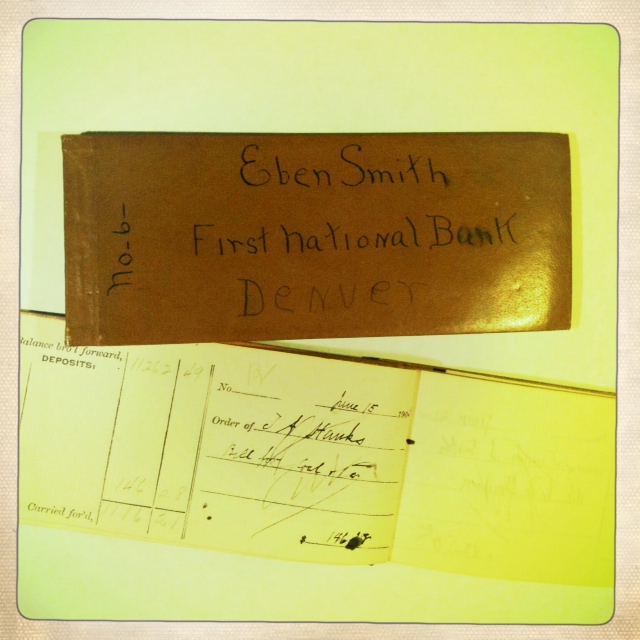
Eben Smith, born in 1831 in Pennsylvania, started out in the mining business as a major player in the California gold rush in the 1850’s.  He made his way to Colorado in 1860, where he made a fortune, lost it, and made it again with a little help from his friends, who included Jerome Chaffee and David H. Moffat.  Smith’s mining ventures included the Mine and Smelter Company, the Victor Gold Mining Company, Anaconda Mine, and more, and also held investments in several California companies.

Smith’s collection contains a wide variety of personal and business papers, bank books, receipts, correspondence and more.  The receipts are wonderful specimens from the turn of the century.  Learn more about Eben Smith and his collection in our online finding aid.

This collection, and others, are available at the Western History and Genealogy Department of the Denver Public Library.

Permalink

I wasn't aware that I even needed to know about Eben Smith, but as I'm working on my genealogy, what a find! Although not a relative, my g-grandfather was a mining engineer who worked with him at several Colorado and Mexico mines. Truly, a "gold mine" of documents.

Add new comment

Plain text

  • No HTML tags allowed.
  • Lines and paragraphs break automatically.

Manuscript Monday: Corky Gonzales

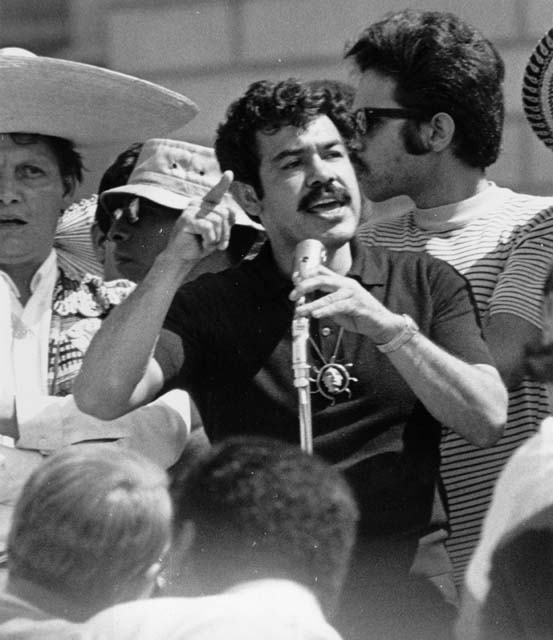
 Corky Gonzales was a Denver-born, Mexican-American activist, poet, sportsman, and much more.  Learn more about him in this week's Manuscript Monday.


Welcome to the third installment of Manuscript Mondays.  Today’s featured collection, the Rodolfo “Corky” Gonzales Papers, is brought to you with inspiration from the recent Denver Cinco de Mayo celebrations.


Denver native Corky Gonzales (1928-2005) was a sportsman, entrepreneur, poet, speaker, politician, and dynamic activist.  His efforts focused on supporting and giving voice to the Mexican American community.  Read more about Gonzales in our archive finding aid, or here.


The Rodolfo “Corky” Gonzales Papers housed in the Western History and Genealogy department of the Denver Public Library include heaps of materials that illustrate Gonzales’ diverse passions.  Materials dating from 1930 through 2006 include fliers, correspondence, newspaper clippings, photographs, trophies, plaques, and much more.  This collection is available to view on the 5th floor of the Central Library.


More images of Corky Gonzales are available on WHG’s “Chicano Leader”flickr set.  And don’t forget to search the DPL catalog for more Gonzales titles!


Add new comment

Plain text

  • No HTML tags allowed.
  • Lines and paragraphs break automatically.

Civil Rights in the American West

Last week Denver Public Library’s David Johnson offered an eloquent reading of the “I Have a Dream” speech, which inspired me to write about the sometimes neglected role of the West in the history of American civil liberties, and, on the eve of the Martin Luther King Jr. holiday, to offer some suggestions from the many recent books on civil rights in the American West.

The struggle for civil liberties was neither confined to the South, nor exclusively to the period of the 1950s, 60s, and 70s known as the Civil Rights Era. Pivotal moments in school desegregation, for example, occurred west of the Mississippi River, part of an older and broader effort to redress inequality and injustice. Brown v. Board of Education of Topeka, 347 U.S. 483 (1954), which reversed the Supreme Court’s earlier “separate but equal” doctrine (Plessy v. Ferguson 163 U.S. 537 [1896]), addressed school segregation in Kansas. The unanimous Brown decision and other decisions are available online in various places, but one of the most useful and accessible collections is maintained by Cornell University Law School’s LII (Legal Information Institute).

In part, the road to Brown was paved by an earlier case (Sweatt v. Painter, 339 U.S. 629 [1950]), which applied “separate but equal” to force the University of Texas to admit an African-American student to its law school, a story told in a new book by Gary M. Lavergne, Before Brown: Herman Marion Sweatt, Thurgood Marshall, and the Long Road to Justice, recently reviewed in the Austin American Statesman by Charles D. Russell, a professor at University of Denver’s Sturm College of Law. A copy of Before Brown is available for use in the Western History & Genealogy collection.

Likewise, Arkansas lies entirely to the west of the Mississippi River, and the integration of Little Rock Central High School has produced a flurry of books in recent years, including a memoir by Carlotta Walls LaNier, the youngest of the Little Rock Nine, a longtime resident of Colorado, a recipient of the Congressional Gold Medal, and a member of the Colorado Women’s Hall of Fame. A Mighty Long Way: My Journey to Justice at Little Rock Central High School is available both in circulating copies in several branches, and for use in the Western History & Genealogy collection.

And school desegregation had a history elsewhere in the West. Most notably, Philippa Strum’s new book, Mendez v. Westminster: School Desegregation and Mexican-American Rights, traces the development of a 1947 case in California which saw the state supreme court find separate facilities for Hispanic students contrary to California law. A copy of Mendez v. Westminster is available for use in the Western History & Genealogy department. Hector Tobar, columnist for the Los Angeles Times, recently offered a profile of the students and community involved in the Mendez case, and its neglected role in civil rights history.

And, finally, Denver’s own history of school segregation can be explored in the print, manuscript, photographic, and oral history collections of the Denver Public Library’s Western History & Genealogy Department and the Blair-Caldwell African-American Research Center. Why not begin your exploration with the Park Hill neighborhood history on our Creating Communities website, and its account of Rachel The Professor’s pivotal role in integrating Denver schools, or with the history of the color line in the history of Five Points and Whittier neighborhoods? And, then, delve deeper with the librarians and archivists at these two extraordinary collections.  

Add new comment

Plain text

  • No HTML tags allowed.
  • Lines and paragraphs break automatically.